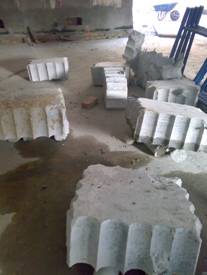
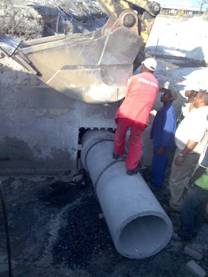
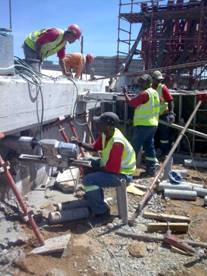
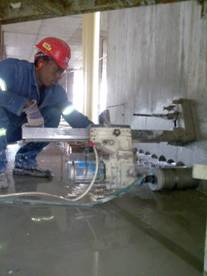
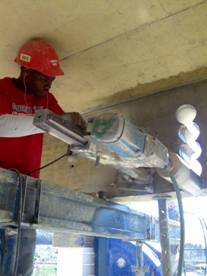
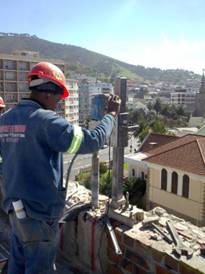
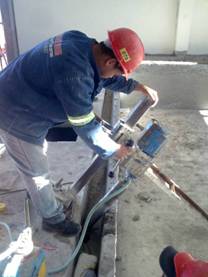
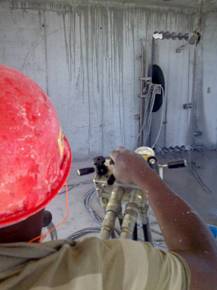
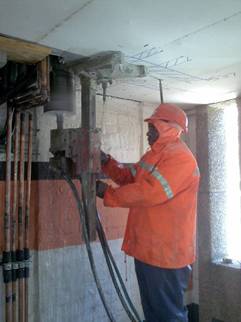
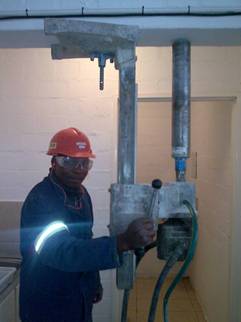
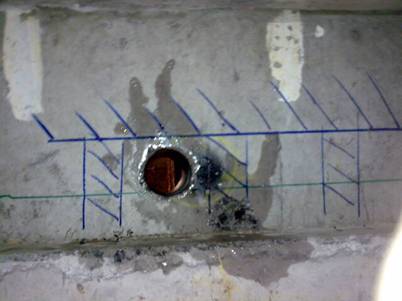
Core drilling produces a smooth accurate hole through reinforced concrete, brick and most stone. Hole sizes vary from 13mm Ø to 500mm Ø. Diamond drilling as it is commonly referred to, is used to create holes for routing cables, plumbing pipes, electrical and HVAC installations. The process is quiet and efficient with no vibration or dust. Water is used to cool and flush the bit during drilling and can be controlled in sensitive areas. For creating larger openings, holes are cut next to each other in a process called stitch drilling.
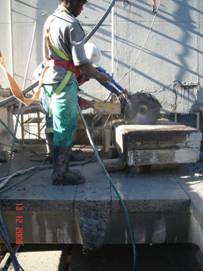
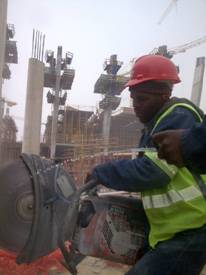
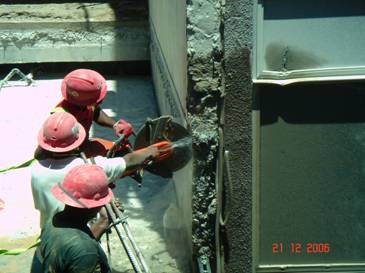
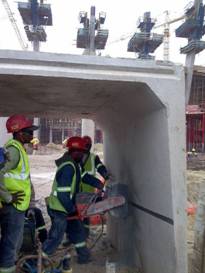
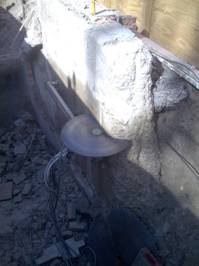
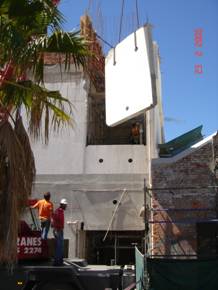
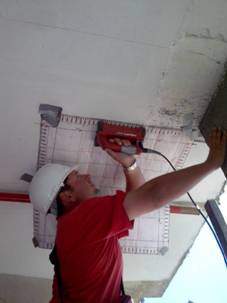
Hand sawing is cutting of concrete or brick with a hand held power cutter. This process also produces a smooth dustless cut. Hand sawing can cut up to 200mm deep. The cutting depth can double to 400mm in walls if access is available on both sides. The saw is commonly used for cutting square openings thru walls and floors for doorways, windows and ducting. It is also a useful tool for cutting through pre-cast panels.
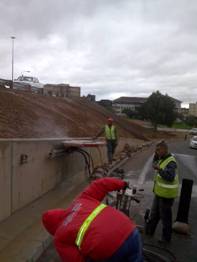
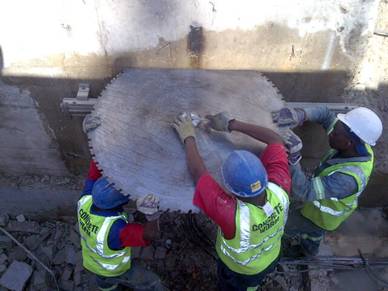
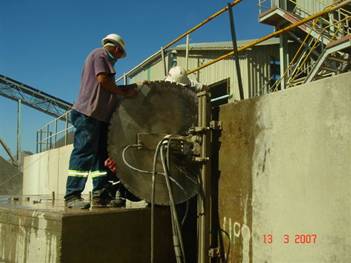
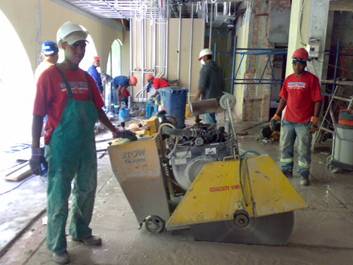
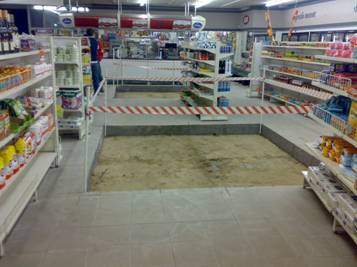
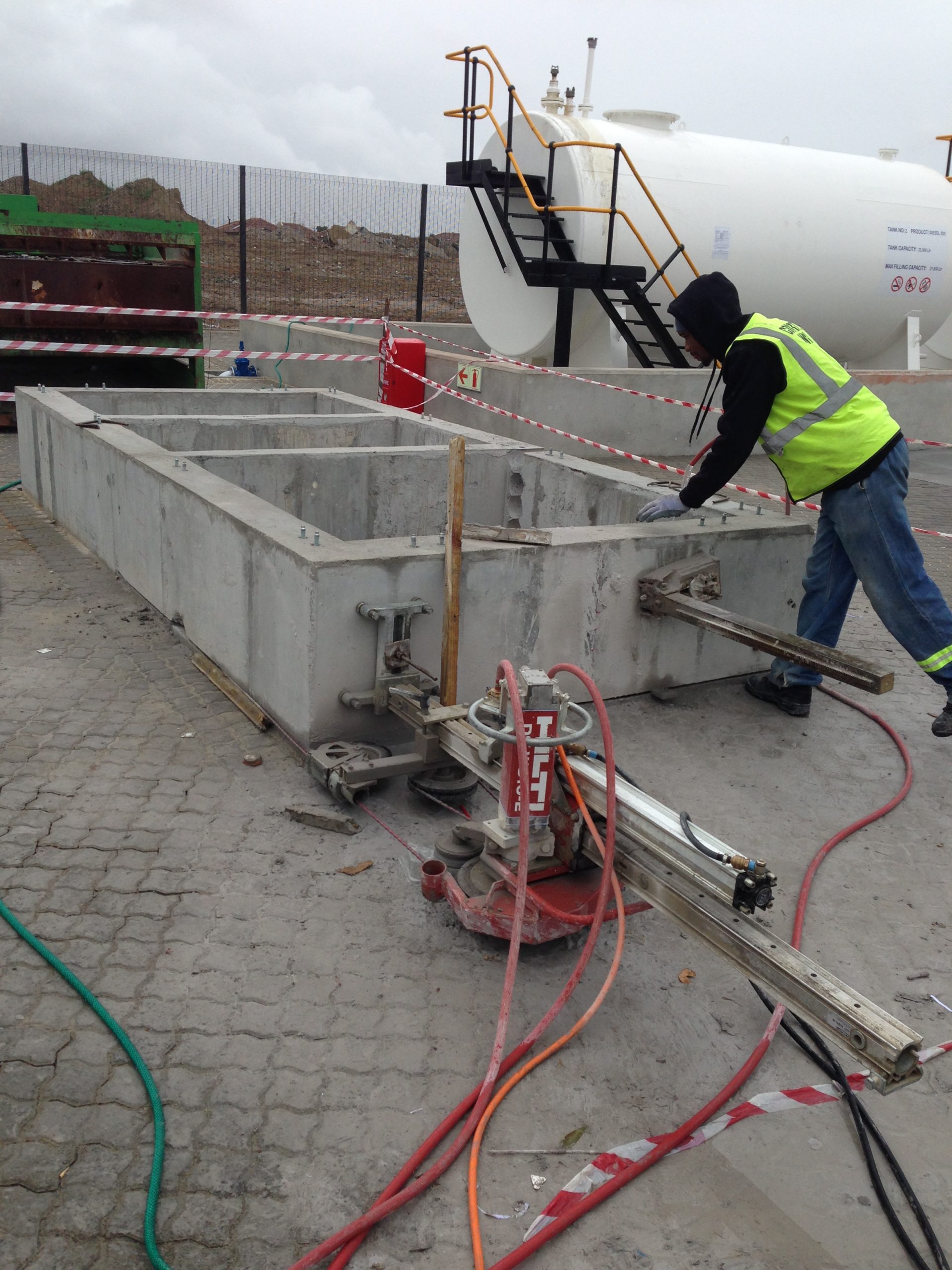
The track mounted wall saw is a fast, neat method of forming larger openings through walls and slabs. The system is small, light and portable. It is ideal for cutting door openings in multi-storey buildings where lifting facilities for heavier cutters are not available. Our wall saws are able to cut up to 730mm deep in reinforced concrete via a remote controlled system for added safety.
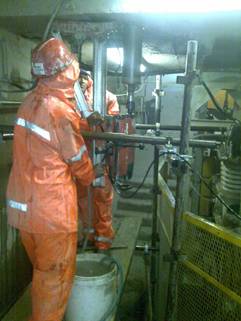
Where core drilling cannot be drilled from the top down and the drilling machine must be inverted (turned upside down) it is unfeasible and dangerous to use an electric machine. For this reason Concrete Worm offers inverted hydraulic drilling which eliminates the need for electricity and thus makes for a safe working environment.
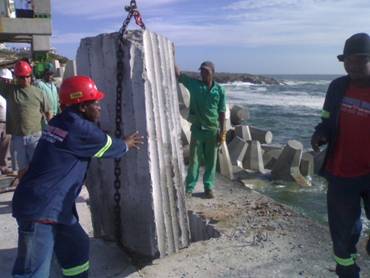
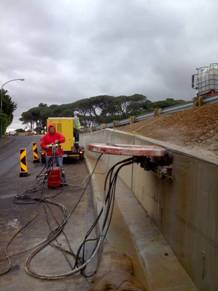
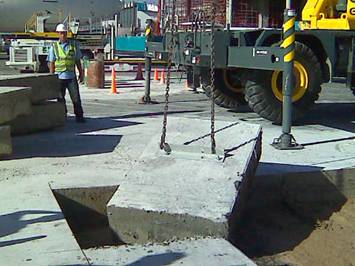
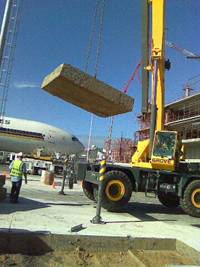
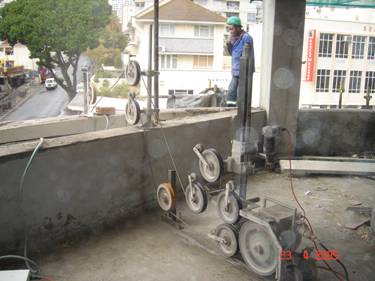
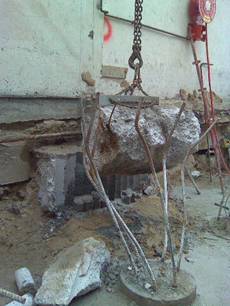
A diamond beaded wire is fed through a series of pullies attached to a drive wheel. A constant pulling force is applied to the wire to cut through the concrete. Wire sawing is ideal to remove large sections of heavily reinforced concrete. Wire sawing has almost unlimited cutting depth and is extremely fast.
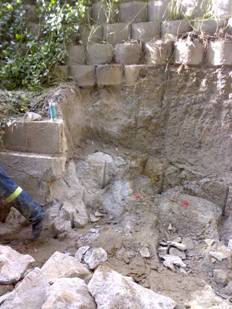
Concrete Worm uses a BOULDER BUSTER for splitting and breaking of rock. Holes are drilled into the rock or concrete into which water is poured. Thereafter the BOULDER BUSTER tool is placed into the hole and a small charge is released. The shock produced in the water causes the rock or concrete to split open. The process is quick, safe and effective especially in sensitive areas where high explosives are not feasible.
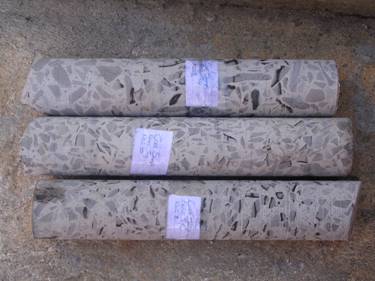
Concrete Worm utilises the latest technology for non-destructive inspection and evaluation of concrete structures. Our Hilti Ferroscan is used to quickly, easily and safely locate embedded steel reinforcing and cabling within concrete structures prior to cutting, coring or drilling. Scanning is also used to quantify the amount of reinforcing within a beam or column, without the need for breaking the structure. We also offer a core crushing service for the compressive testing of concrete. In this process core samples are taken from a structure and sent to a laboratory where they are crushed under pressure to measure their compressive strength.
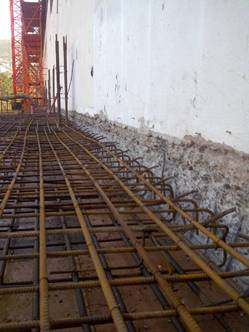
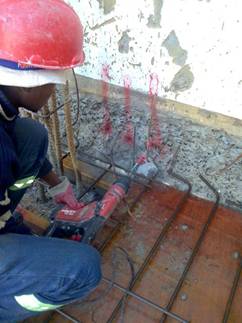
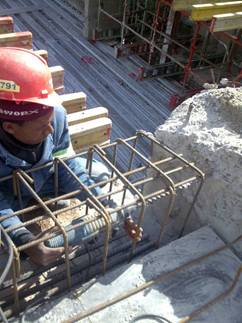
Scabbling is used to prepare the surface of old concrete for bonding to new concrete. The process involves roughing of the old surface and removal of all debris. This increases the surface area to which the new concrete can easily bond. This is commonly used to join new slabs or beams to existing structures.